
Last updated November 24, 2026
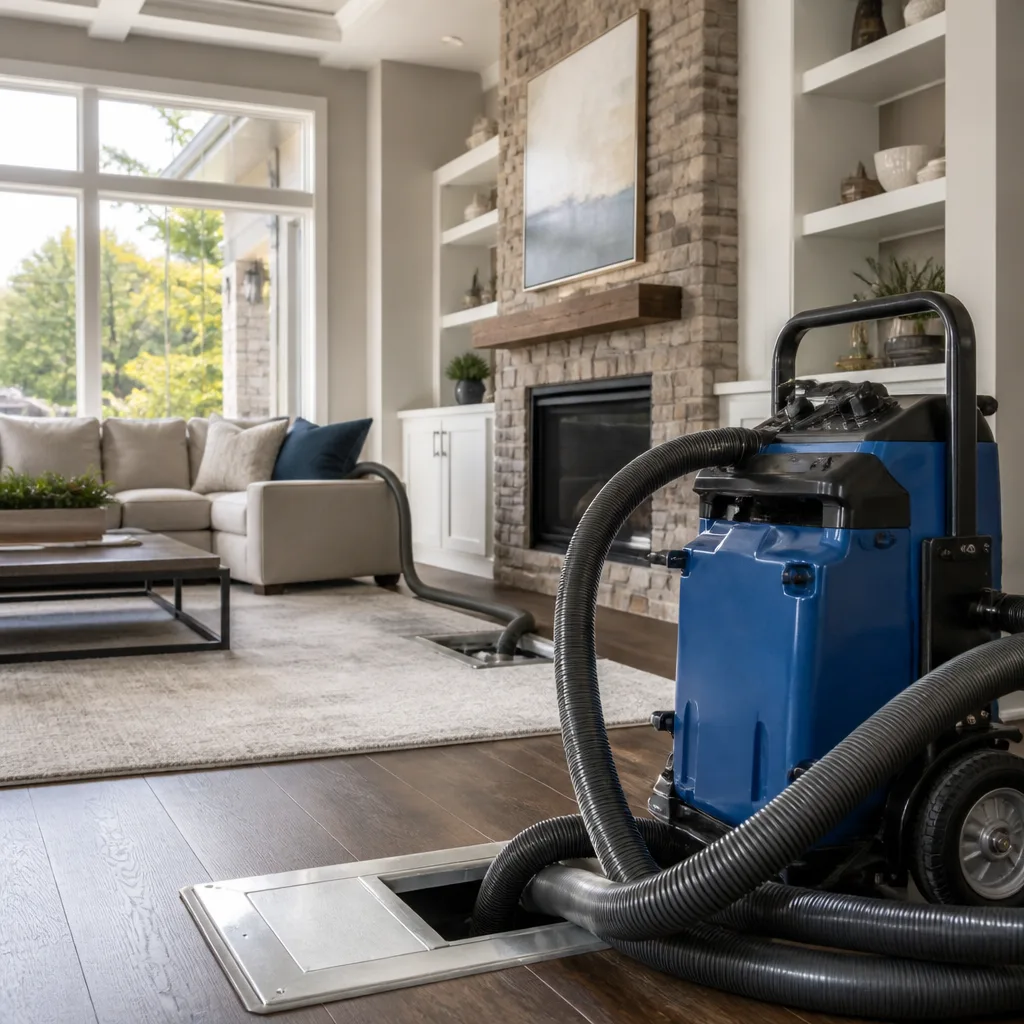 Whole-home duct cleaning
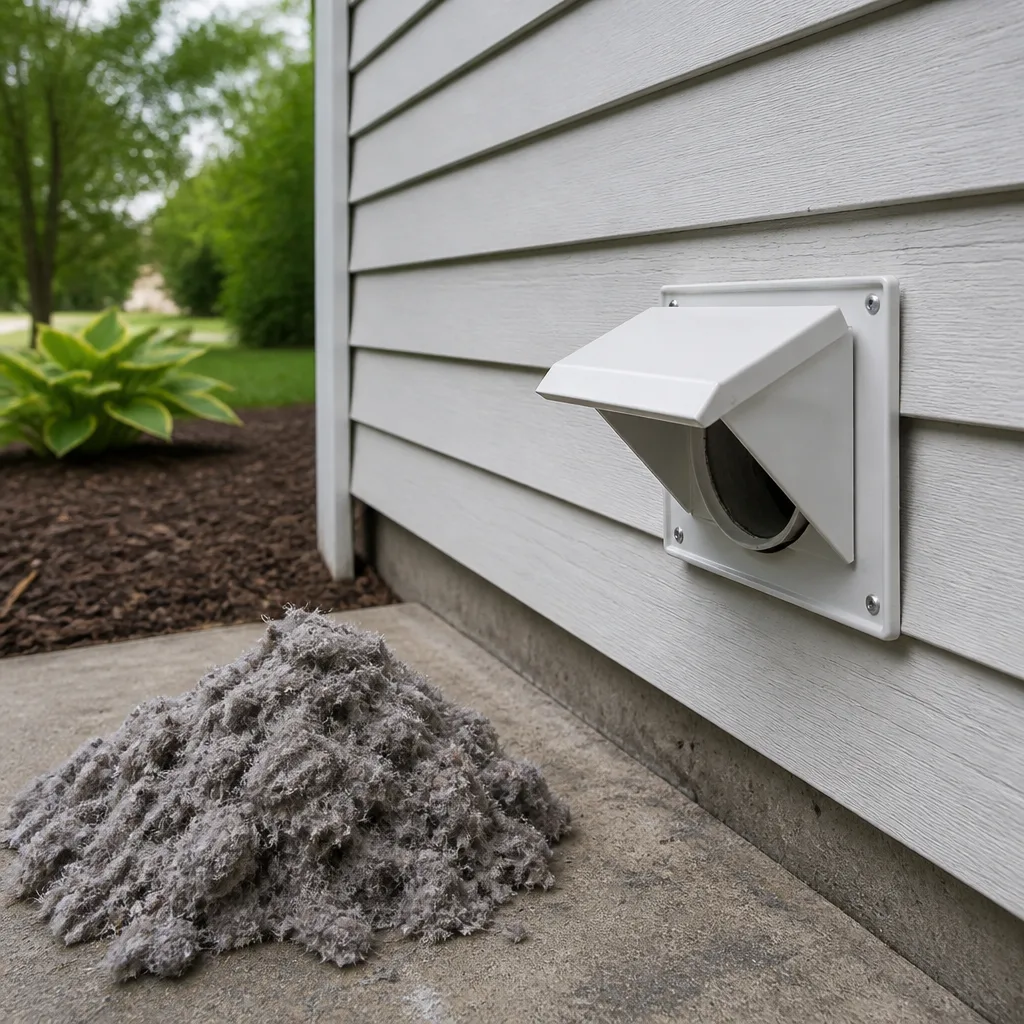 Dryer vent cleaning
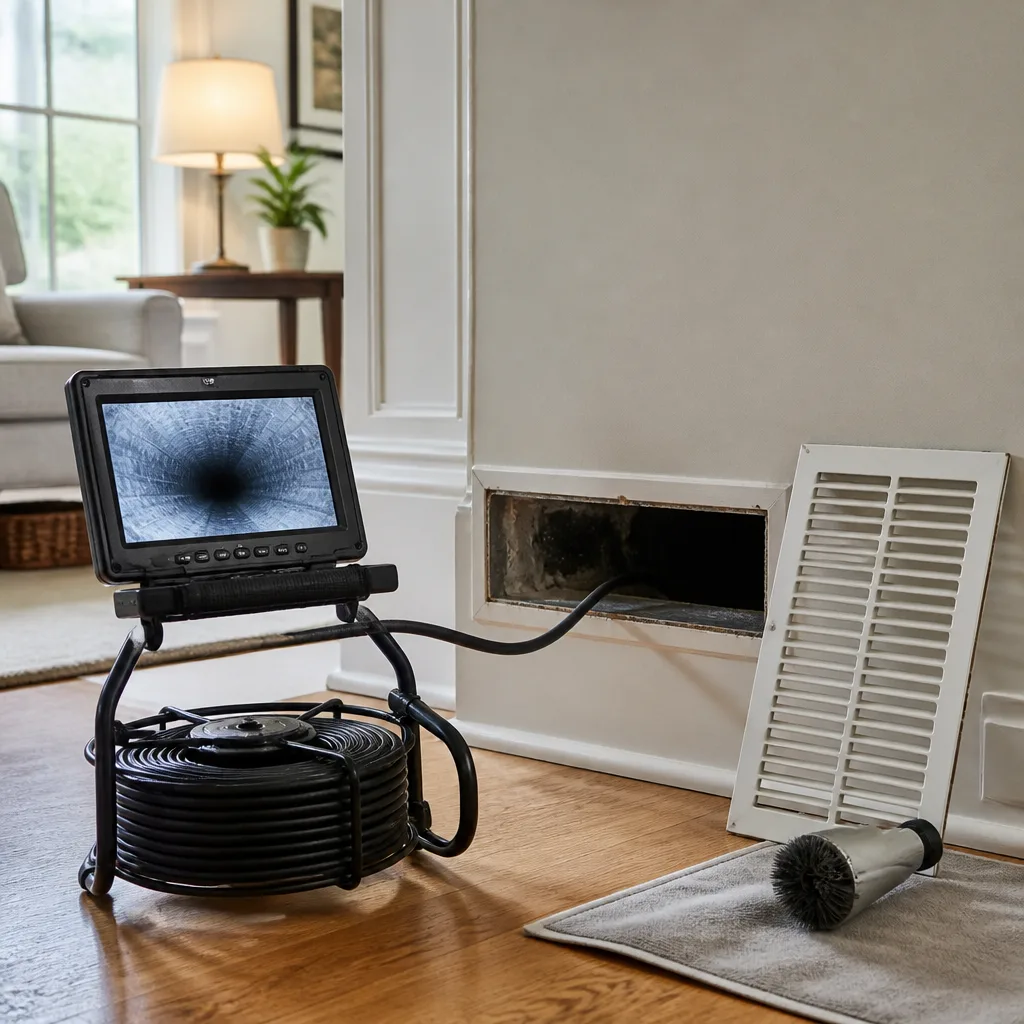 Camera inspection
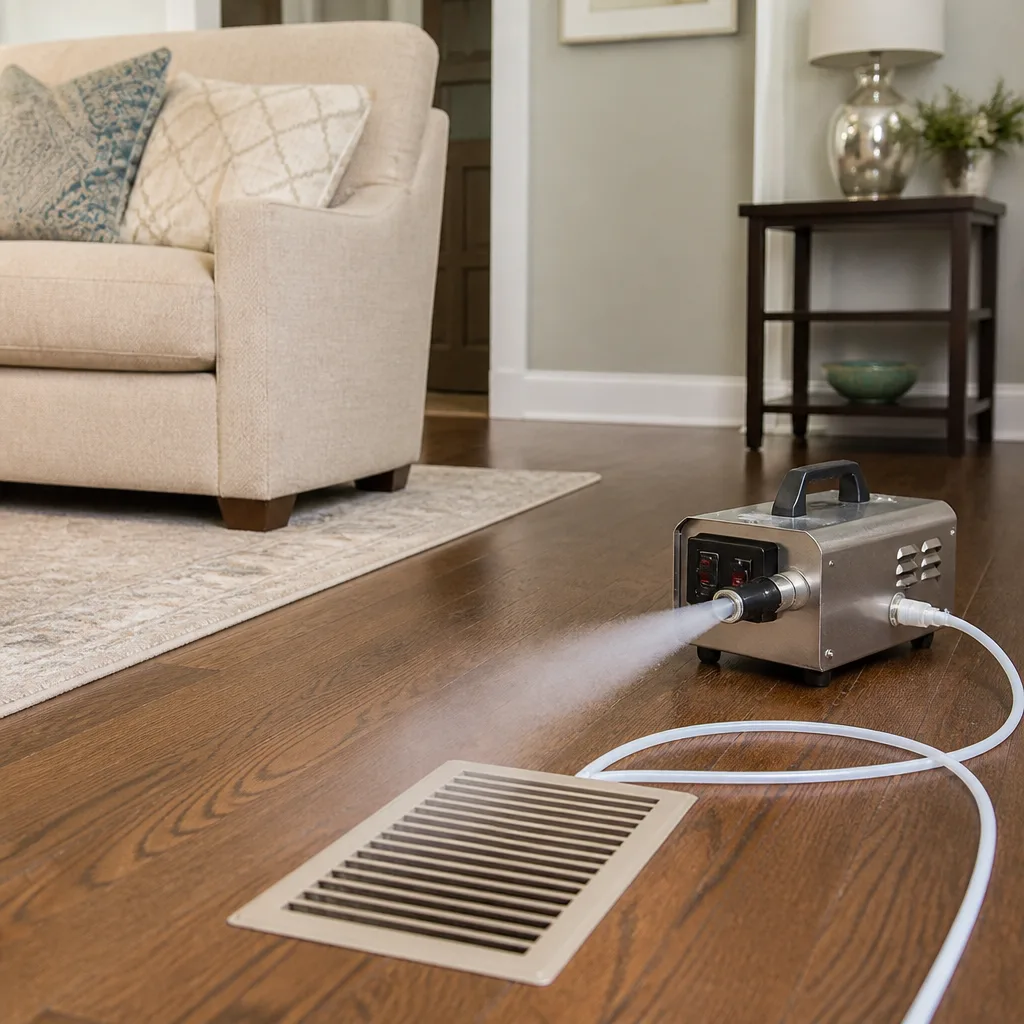 Sanitizing & deodorizing
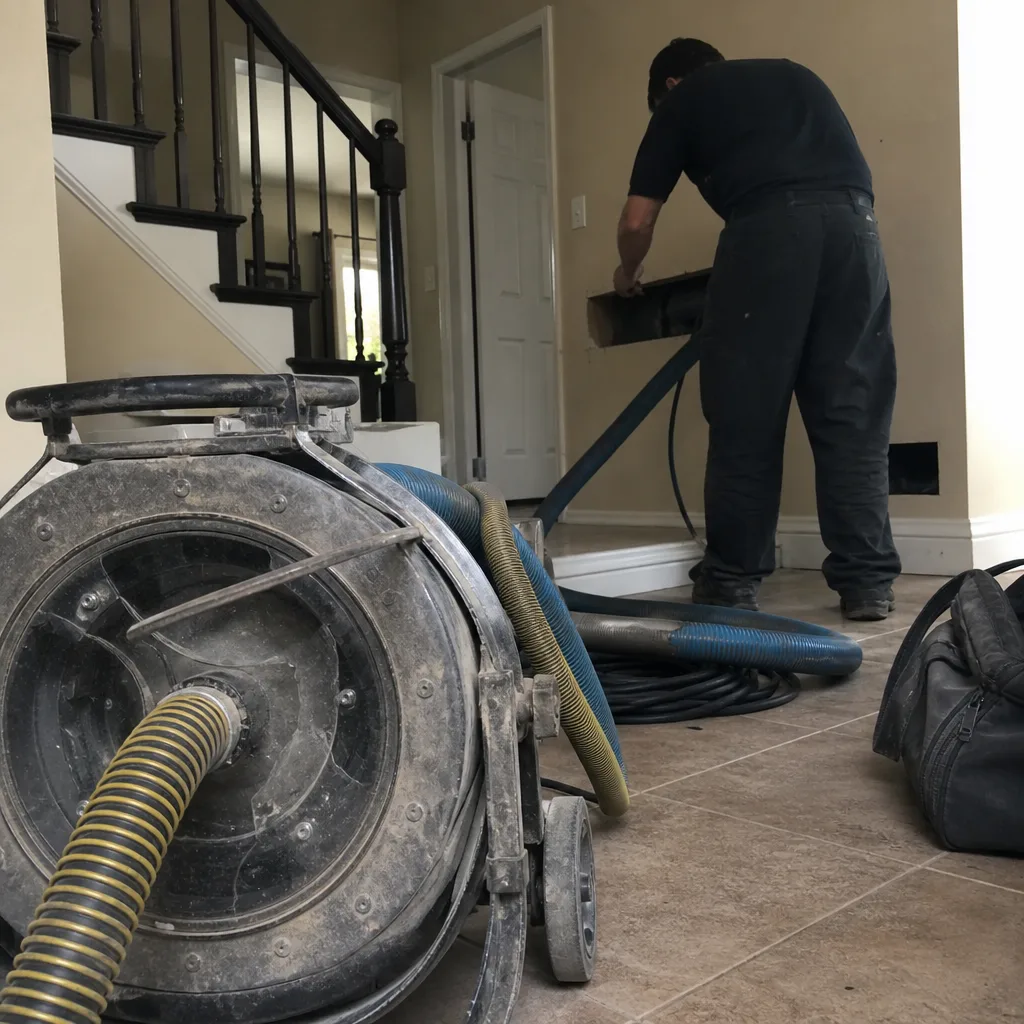
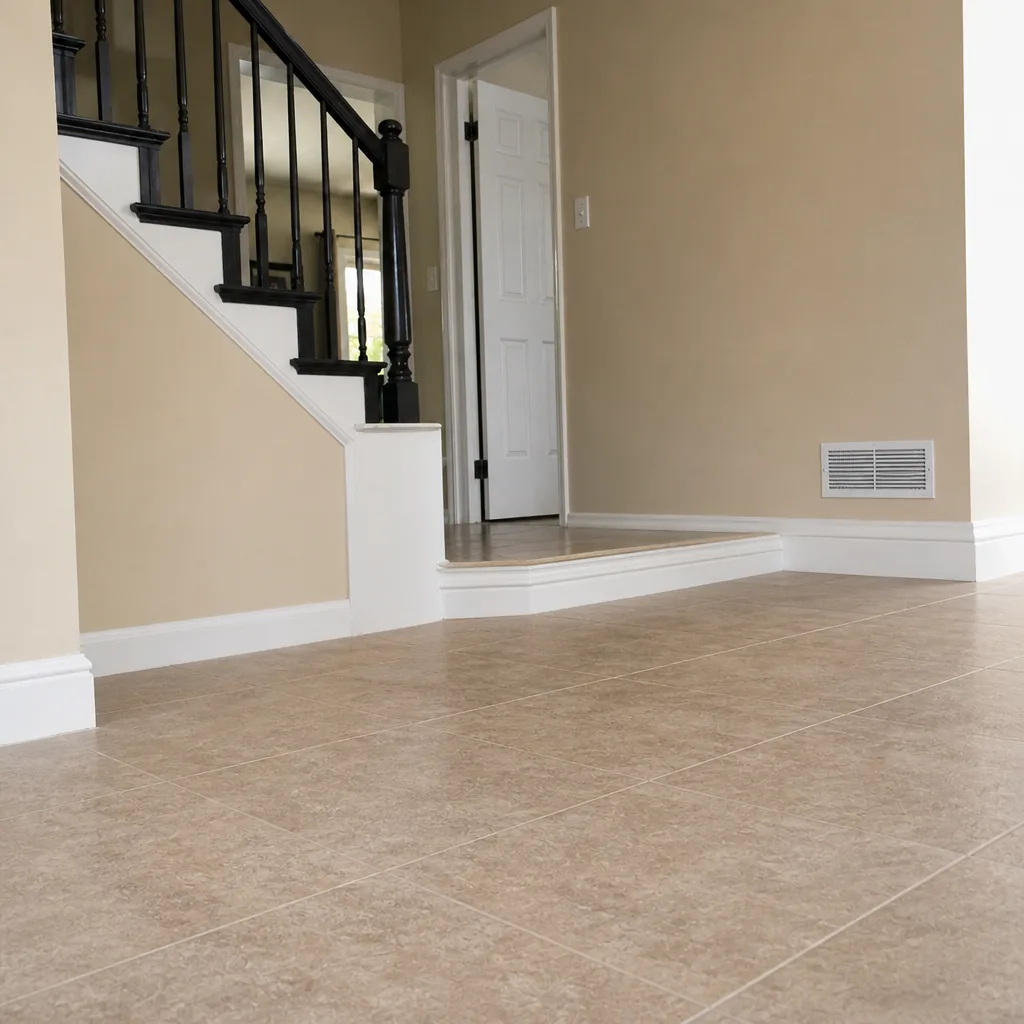
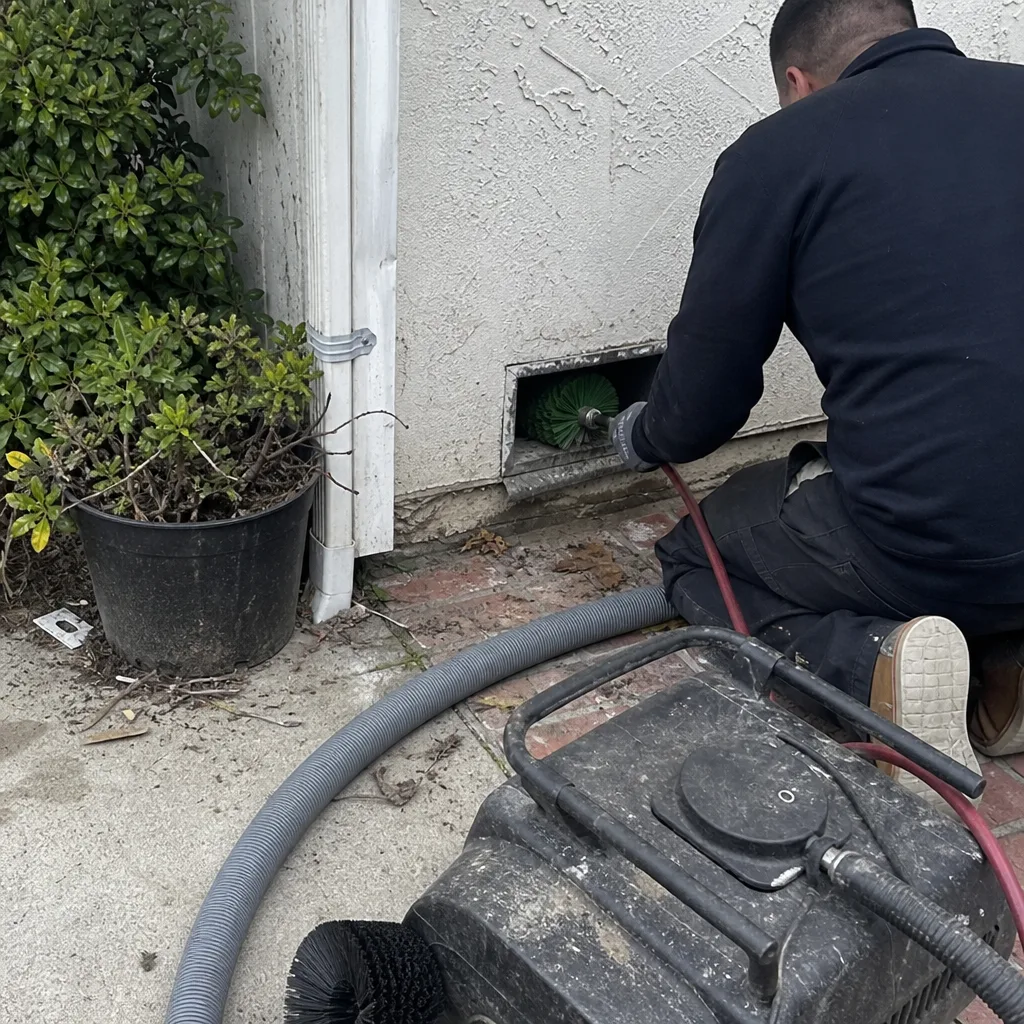
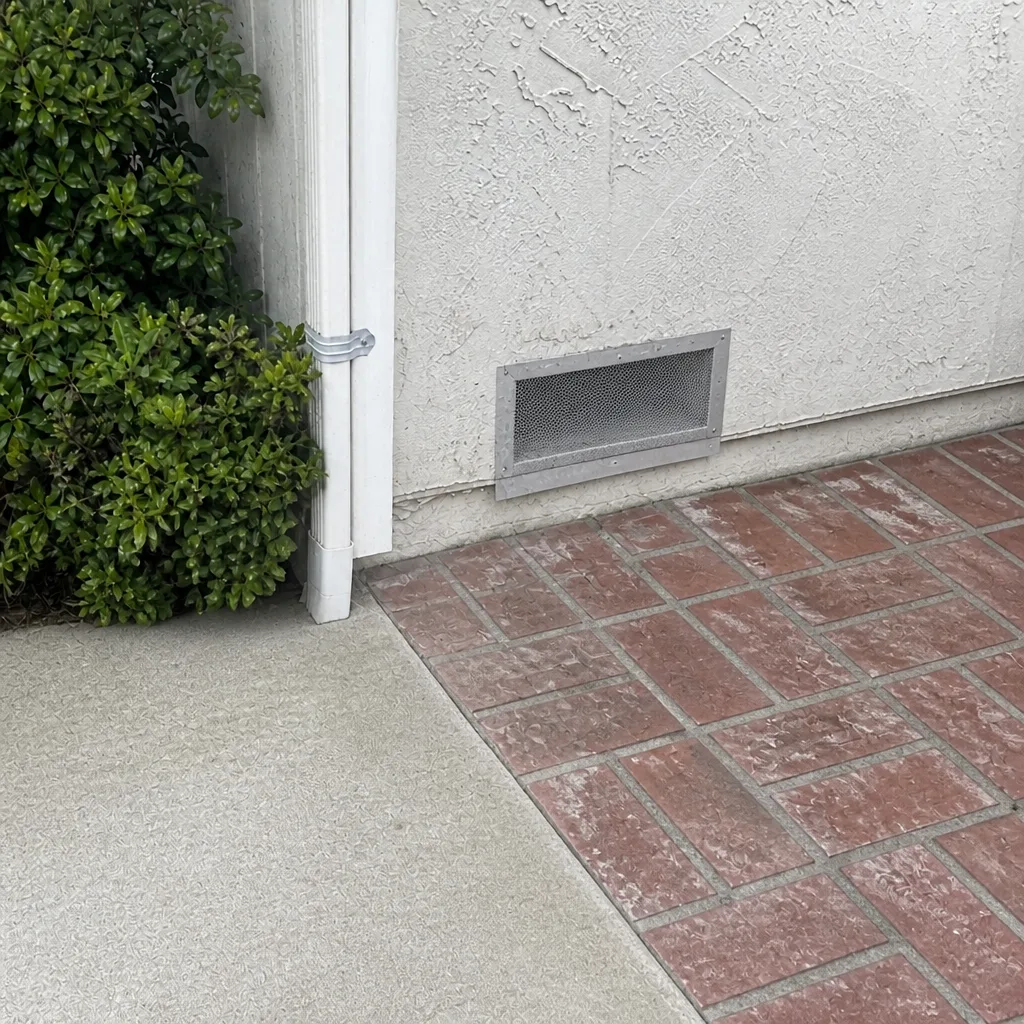
Whole-system duct and dryer vent check with before-and-after photos - you see exactly what came out of your vents
That "$99 whole-house special" is a bait ad - the real number appears once they are in your hallway, or the "clean" is a shop-vac at the register. We photograph the inside of your ducts before and after instead.
Air Duct Cleaning Permits, Codes & Inspections in Huntington Beach, CA: What You Need to Know
Nobody expects a permit to clean dust out of a duct. That’s the part that trips people up. Cleaning is one thing; cutting a new access panel into a return plenum, reconnecting flex duct a technician found sagging, or fogging a duct system with an EPA-registered antimicrobial is something else entirely, and in Huntington Beach those lines matter. They can touch your homeowner’s insurance, what you disclose at resale, and whether the person doing the work is actually allowed to do it. This guide walks through where cleaning ends and regulated work begins, what California’s air quality rules say about chemicals inside HVAC systems, and what to ask before anyone opens a panel in your house.
Quick Answer
Routine air duct cleaning does not require a permit in California, including in Huntington Beach. But any modification to the duct system itself, including cutting new access openings, reconnecting or rerouting flex duct, or replacing duct runs, falls under mechanical permit rules in most California jurisdictions, and a contractor performing that repair side needs an appropriate California contractor license. Separately, applying any antimicrobial or chemical treatment inside an HVAC system is governed by California EPA and CARB requirements, and the contractor is required to show you the product registration and application instructions before spraying anything.
Styles & brands we work with
- Whole-home duct cleaning
- Dryer vent cleaning
- Camera inspection
- Sanitizing & deodorizing
Table of Contents
- Is a permit required for air duct cleaning in Huntington Beach?
- Where cleaning stops and duct repair begins
- California EPA and CARB rules for antimicrobials in HVAC systems
- What Huntington Beach Building & Safety looks at
- Contractor licensing: cleaning vs. mechanical repair
- HOA and rental property inspection triggers
- What a proper post-service inspection should cover
- Common mistakes to avoid
Is a permit required for air duct cleaning in Huntington Beach?
No. Cleaning alone does not require a permit in Huntington Beach, and that’s true across California. Cleaning means removing accumulated dust, debris and biological growth from the interior surfaces of the duct system using negative-pressure equipment and agitation tools. Nothing about that changes the structure of your home, alters a mechanical system, or creates a new penetration in a wall or ceiling.
What makes this simple answer complicated is that a real cleaning job sometimes uncovers problems. Ductwork in a house or commercial building in Huntington Beach can be compromised in ways that only show up once the system is under negative pressure and someone can see inside it. When that happens, the service stops being only a cleaning.
The practical distinction:
- Cleaning only – no permit, no structural change, no mechanical alteration.
- Cutting a new access panel – usually requires a mechanical permit, because you’re creating an opening in the mechanical system and sealing it back in a code-compliant way.
- Reconnecting or rerouting flex duct – mechanical work on the system; permit and licensing territory.
- Replacing a section of rigid duct or a duct run – mechanical permit.
- Applying a registered biocide or antimicrobial – governed by separate chemical-use rules (see the CARB section below), separate from permits.
If a technician tells you they’ll “just cut a quick access point” with no mention of a permit, that’s a signal to ask questions. Not because it can’t be done, but because you deserve to know whether that step moves you out of pure cleaning and into permitted work.
Where cleaning stops and duct repair begins
The dividing line is simple in principle and fuzzy in the field. Cleaning is removal. Duct repair is restoration or modification. Any time a technician is adding material, cutting into a rigid duct run, sealing a joint in a way that changes the system, or replacing a section of ducting, the job has crossed into mechanical territory.
Here’s what that looks like in practice, broken down into the three categories that matter for permits and licenses:
- Cleaning: negative-pressure extraction, agitation with rotary brushes or air whips, HEPA filtration of exhaust. No permit required.
- Duct repair and sealing: mastic sealing of joints, reconnection of disconnected flex runs, spot replacement of crushed or torn sections, adding new access doors. Mechanical permit likely required in Huntington Beach for anything that modifies the system.
- Replacement: replacing a full duct run or the entire trunk-and-branch system. Full mechanical permit, licensed contractor, and often an inspection from the city.
We keep our air duct cleaning and our duct repair work clearly separated for this exact reason. Cleaning is cleaning. Repair is repair. If a duct cleaning uncovers a disconnected run in a Huntington Beach house, you should be told before any repair begins and told what category of work it is, because that determines whether a permit is needed and whether the contractor is licensed to perform it.
One more thing people don’t always realize: duct sealing (mastic at the joints) is a repair. A technician who goes around your whole system sealing every joint to reduce leakage is performing duct repair, not cleaning. In Huntington Beach, that typically means permit territory.
California EPA and CARB rules for antimicrobials in HVAC systems
Spraying anything into a duct system that people breathe through all day deserves more scrutiny than it usually gets. In California, it gets more scrutiny from regulators too. The California Air Resources Board (CARB) and the California Environmental Protection Agency regulate the use of antimicrobial pesticides and chemical treatments, including those applied inside HVAC systems, and the rules are not loose.
Before a contractor applies any antimicrobial, sanitizing agent, or biocide to your duct system, they should be able to show you:
- The EPA registration number of the specific product they plan to use.
- The manufacturer’s label and application instructions, including the required dilution and contact time.
- Whether the product is registered for use inside HVAC systems specifically, not just for hard surfaces.
- Confirmation that they are applying it per label, including whether the system must be off, empty of occupants, or ventilated afterward.
Some fogging products sold to consumers are not registered for HVAC interior use. Some are. The difference matters, and it matters more in a climate like Huntington Beach’s, where a system runs year-round and any residue in the duct surface is continually exhaled through the supply registers. California’s chemical rules exist for the homeowner’s protection, and a legitimately licensed contractor knows the difference between a product labeled for ductwork and one that isn’t.
If a contractor can’t produce a label, hedging, or the safe application information for the product they intend to spray, ask them to skip the antimicrobial step entirely. Cleaning alone handles most biological growth when done properly with professional-grade equipment, and it doesn’t add a chemical variable. Our HVAC cleaning approach follows the same rule: apply chemistry by the label, or don’t apply it.
What Huntington Beach Building & Safety looks at
The City of Huntington Beach Building & Safety Division issues mechanical permits for work that modifies a building’s mechanical system, including duct modifications, replacements, and new HVAC installations. That doesn’t mean they’re reviewing cleaning logs; it means that any time a duct repair or replacement is on the table, a permit application goes through the city.
In practical terms, when duct work goes beyond cleaning in Huntington Beach, here’s the sequence a homeowner should expect:
- Scope is written and reviewed. The contractor prepares a written scope that distinguishes cleaning from repair. The written estimate is what sets the final price.
- Permit is pulled (if required). For mechanical repair, replacement, or new duct runs, a permit is filed with the city before work begins.
- Work is performed. Cleaning and repair are done with the equipment on hand: negative-pressure machines, air tools, HEPA vacuums, mastic, and code-approved duct materials.
- Inspection is scheduled (if required by the permit). The city inspector reviews the repair work for code compliance before the job is closed out.
- Job closes. You receive documentation of the work performed and the permit is closed.
If a Huntington Beach contractor proposes installing a new supply run or replacing a damaged trunk line, ask directly: “Are you pulling a permit?” A mechanical contractor licensed to do the repair will say yes without hesitation. An unlicensed one will usually try to talk around it. The permits exist for you, and they give you a paper trail that matters at resale, at insurance, and if a problem turns up later.
If your job is only a duct cleaning, no permit is involved. Good. That keeps a routine service from generating paperwork. The moment a repair is added, permit becomes part of the conversation, and that’s a good thing.
Contractor licensing: cleaning vs. mechanical repair
Cleaning ducts does not require a C-20 Warm-Air Heating, Ventilating and Air-Conditioning Contractor license. That’s worth repeating because a lot of homeowners assume anyone touching their ductwork must be licensed. Strictly speaking, cleaning is maintenance, and maintenance of this kind does not require the C-20.
Duct repair does. Performing mechanical repair, replacing duct runs, modifying a mechanical system, or installing any part of it is licensed work in California, typically under the C-20 classification for HVAC contractors. That line exists to protect you: it means the person reconnecting flex duct and cutting new plenums has been vetted for that specific type of work, and there’s a state agency with authority to act if it’s done wrong.
What this means when you’re booking:
- For a straight cleaning: no C-20 required, but ask what equipment they use. Professional-grade makes a measurable difference.
- For duct repair or sealing: ask for the license and verify it on the CSLB (Contractors State License Board) website yourself. Don’t take a business card as proof.
- For biocide or antimicrobial application: ask what the product is, ask to see the label, and confirm the contractor is applying per manufacturer instructions.
When we connect you with a local pro for anything that crosses into repair, that pro is licensed and insured as their state requires. When you’re only booking a dryer vent cleaning, the licensing requirement is different in scope, but the safety concern is just as real – dryer vents are a documented leading cause of residential fires when neglected, which is why we offer that as a dedicated service rather than treating it as an afterthought on a cleaning invoice.
HOA and rental property inspection triggers
HOA governing documents and landlord obligations can require an inspection of the HVAC system or ductwork after any service, not just after HVAC work. If your Huntington Beach home sits in an HOA, or you’re renting, there are at least three scenarios where the paperwork side of a duct cleaning matters more than the dust side.
For HOAs, the triggers that commonly show up in governing documents include:
- Any new penetrations to the exterior wall or roof associated with HVAC work.
- Changes to mechanical equipment visible from the street or neighbor’s property.
- Post-service documentation requirements for rental units within the association.
For landlords and property managers, three scenarios commonly trigger an inspection or documentation requirement:
- Tenant-reported symptoms (musty odor, ongoing dust) that prompted the cleaning in the first place.
- Any repair work performed as part of the service, which may require a permit record on file.
- A change of tenant, where inspection records get folded into move-in/move-out documentation.
If you’re a Huntington Beach property manager coordinating a multi-unit duct cleaning, ask for the paperwork to be organized by unit and specify which permit records or repair invoices need to end up where. Getting that sorted before the work starts saves a week of backtracking afterward.
What a proper post-service inspection should cover
You should be able to see evidence the work was done. Not take our word for it. Not take a verbal summary. Photos, before and after, of your own ducts.
A genuine post-service inspection in Huntington Beach should cover, at minimum:
- Before-and-after photos of representative duct runs, the plenum, and every register. The job isn’t verified until it’s photographed.
- Access panel confirmation. Every panel opened is closed and sealed back with code-appropriate material.
- Airflow verification. A basic check that registers are still delivering airflow at every supply and the system pressure hasn’t shifted after cleaning.
- Dryer vent check, done as a separate logged service if included. The exit terminal should be clear, unobstructed, and correctly dampered.
- Any antimicrobial application documentation, if used, with product name and EPA registration number.
- Any repair documentation, with a note on whether a permit was pulled (and the permit number if so).
- Written summary of the exact scope of work performed and whether it was cleaning only, cleaning plus repair, or cleaning plus treatment.
In our experience, this is where a lot of Huntington Beach homeowners get shortchanged. The work is done, a verbal “all good” is offered, and no documentation follows. That leaves you with nothing to give a landlord, an HOA, or a buyer at resale. We use Rotobrush and Nikro equipment for a reason – those systems let us photograph the interior of the ducting meaningfully and show the actual before-and-after – but the documentation discipline matters as much as the equipment. Ask for the photos before the technician leaves.
Common Mistakes to Avoid
- Assuming “no permit needed” applies to everything. Cleaning doesn’t require a permit; duct repair does. If the technician is going to cut, reconnect, or replace anything, ask about the permit before the work starts, not after.
- Letting a contractor cut a new access point without questioning it. A new panel in Huntington Beach usually requires a mechanical permit. Ask direct questions before the saw comes out.
- Accepting an antimicrobial fog with no label shown. Ask for the EPA registration number and the label’s interior-HVAC application instructions. If it can’t be shown, skip the chemical step and clean only.
- Hiring a cleaning company for duct repair work. Cleaning doesn’t need a C-20 license; repair does. Verify the license on the CSLB site yourself before any repair work is booked.
- Skipping documentation for rental or HOA situations. Photos and repair records should exist before the technician leaves the property. Chasing them down a week later is harder than asking up front.
- Believing the coupon price is the final price. A quoted price that holds for one vent but expands once the technician sees the system is the industry’s oldest bait-and-switch. Ask for one flat price per system, agreed before work starts, in writing.
- Treating dryer vent cleaning as a throw-in. Neglected dryer vents are a documented fire risk. Have them serviced on their own schedule, with a photo of the cleared line, not buried in a bundle.
See the difference
 Before
 After
 Before
 After
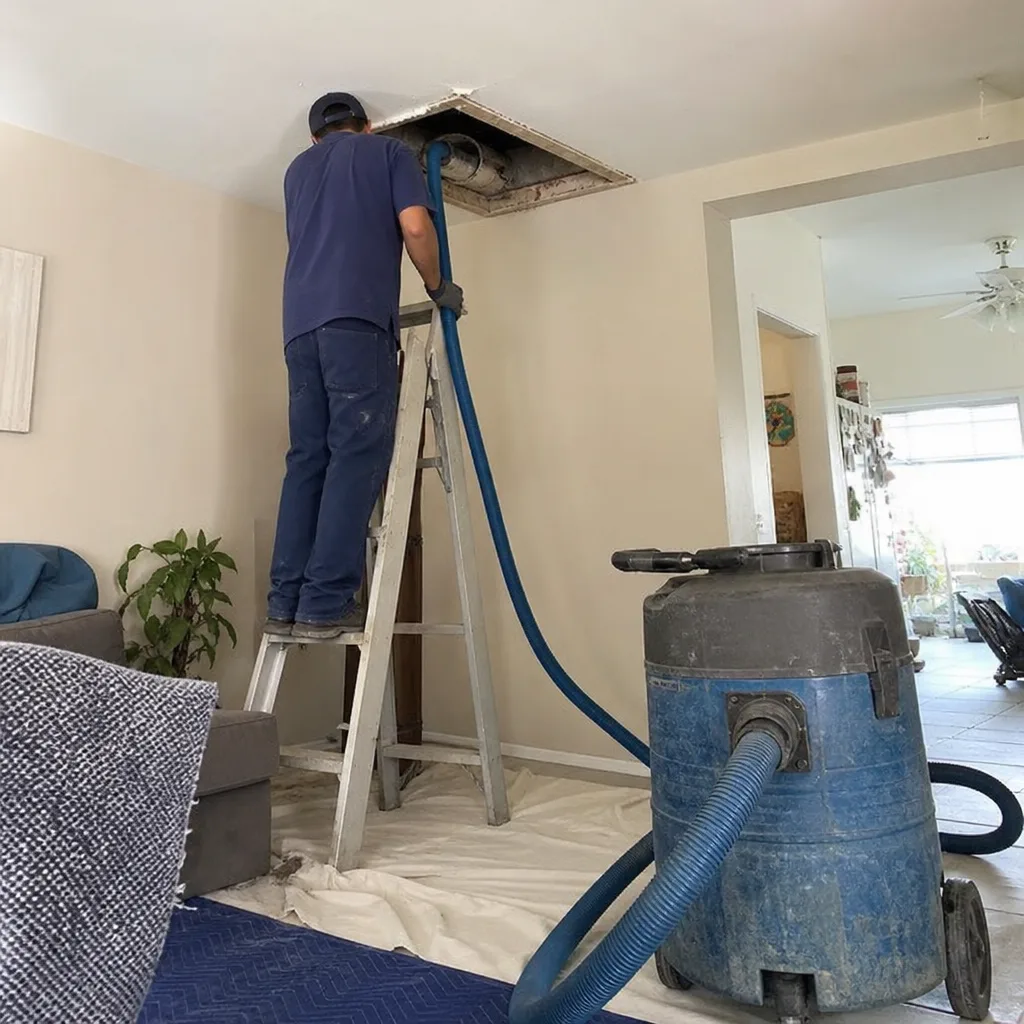 Before
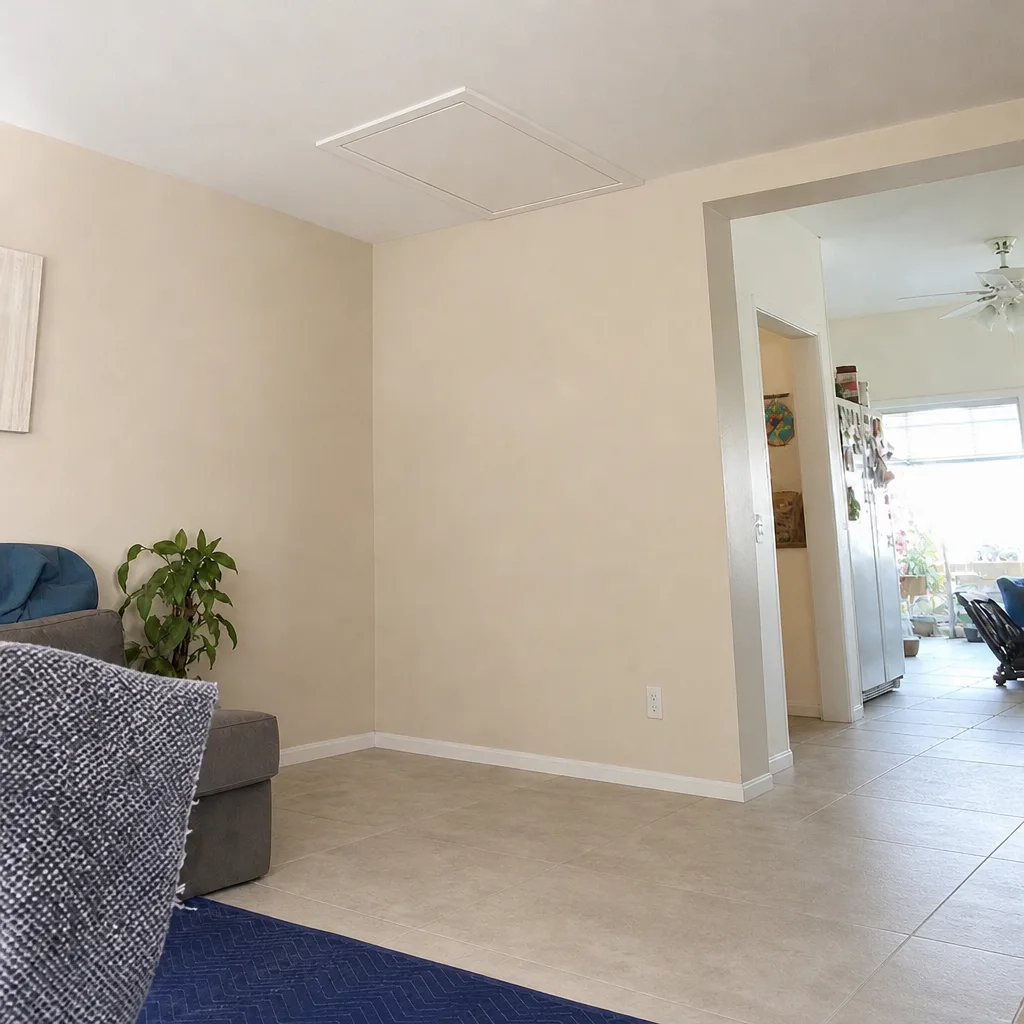 After
When to Call a Professional
Some jobs clearly call for a trained technician. A musty odor coming from more than one register in an otherwise clean Huntington Beach home. Dust returning within days of cleaning. A visible disconnected flex run in the attic. The dryer taking two cycles to dry a load. Visible rodent droppings or nesting material in a return register. A system that whistles or loses airflow after a recent HVAC install. Any of those is a call, not a weekend project, because duct cleaning and repair done by hand with a shop-vac will not achieve the result and can make things worse by pushing debris deeper into the system. Huntington Beach Air Duct Cleaning Co offers free estimates in Huntington Beach – call (855) 658-4076. We answer 24/7. Fast dispatch from 7am to 7pm, Sunday through Friday.
Frequently Asked Questions
No. Routine air duct cleaning does not require a permit in Huntington Beach or anywhere else in California. The permit requirement kicks in only when the job includes mechanical work: cutting new access panels, reconnecting duct runs, replacing duct sections, or any modification to the mechanical system. Ask your contractor to separate cleaning from repair in the written estimate so you can see exactly which category each line falls into. Call (855) 658-4076 for an exact quote – estimates are free.
A C-20 HVAC contractor license is not required for cleaning alone in California. It is required for any mechanical repair on the duct system, including sealing, reconnecting, and replacing duct runs. Ask for the license and verify it yourself on the CSLB site before any repair work is booked. A legitimately licensed contractor will not hesitate to give you the license number; an unlicensed one usually won’t.
No. California EPA and CARB rules governing antimicrobial products inside HVAC systems require application per the manufacturer’s label, and the contractor should be able to show you the EPA registration number and the label before applying. Some products sold for surface cleaning are not registered for use inside ductwork. If the contractor can’t produce the label, ask them to clean only without the antimicrobial step.
It depends on the scope, and the written estimate sets the final price per job. Small repairs (reconnection of a flex run, spot sealing of joints) cost a different amount than replacing a full duct trunk or adding multiple new access panels, and the permit filing is part of the picture. Give a licensed local pro a chance to inspect the system and put the repair scope in writing before any work begins. Call (855) 658-4076 – estimates are free.
Most Huntington Beach homes show meaningful interior accumulation somewhere in the three-to-seven year range, but the honest answer is that it depends on your house: pets, indoor humidity management, recent remodeling, nearby construction, and how well your filtration is set up all shift that timeline. A pre-cleaning inspection with a camera scope tells you what your system actually looks like instead of a generic calendar rule. Call (855) 658-4076 for an exact quote – estimates are free.
Respond to the disclosure questionnaire honestly and completely; that’s the standard. If the work included a mechanical repair with a permit, the permit record is public and typically turns up in a title search or property history. If the work included a biocide application, that’s worth keeping documentation on, since a future buyer’s inspector may ask. Routine cleaning alone usually doesn’t need special disclosure beyond answering the standard question about known defects. Keep your before-and-after photos and any repair documentation on file – that makes the resale conversation easier.
The Bottom Line
Cleaning your ducts doesn’t need a permit; repairing them usually does. That’s the whole guide in one line. California’s CARB rules add a second layer when a contractor wants to spray anything inside the system, and the contractor licensing distinction – no C-20 needed to clean, C-20 needed to repair – is the piece homeowners most often miss. Get the work categorized in writing before it starts, ask for photos and any permit records before the technician leaves, and treat dryer vent service as its own safety item rather than a cleaning add-on. The paperwork protects you at resale, at insurance, and if a problem surfaces later. Call (855) 658-4076. We answer 24/7. Fast dispatch from 7am to 7pm, Sunday through Friday.
Written by the team at Huntington Beach Air Duct Cleaning Co.